Trailer Spare Parts Kits
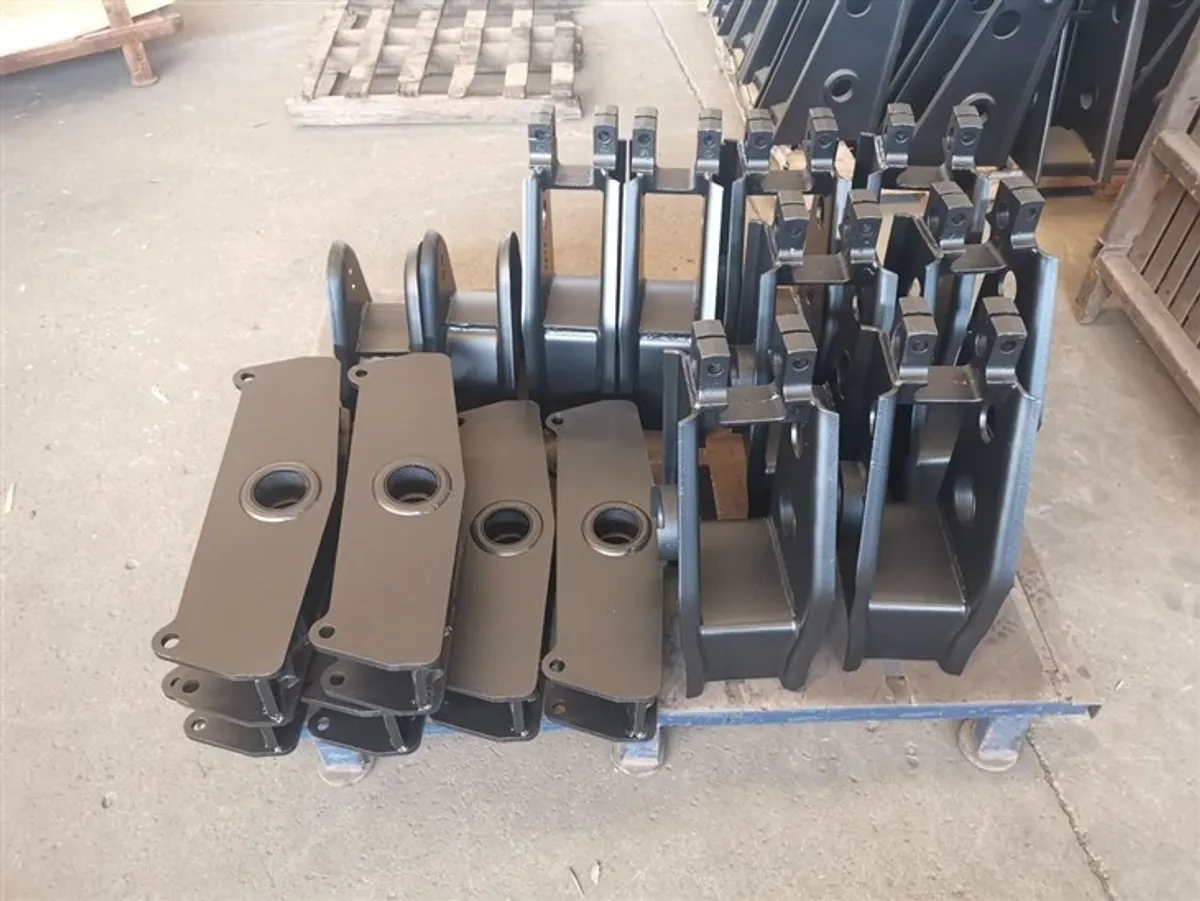
Sigma Trailer Parts packs trailer spare parts kits, SKD, and CKD sets to a customer's bill of materials — maintenance restocks for fleets already running trailers, and knocked-down kits for shops assembling new ones — built from parts coming off our own axle, suspension, brake, and fastener lines.
Specifications
| Kit Types | Maintenance kit, SKD, CKD |
|---|---|
| Contents | Built to customer bill of materials |
| Sub-assemblies Covered | Axle, suspension, brake, coupling, electrical, fasteners |
| Packaging | Crated and labeled by sub-assembly |
| Documentation | Packing list with matched part numbers |
| CKD/SKD Assembly | Assembly reference included |
| Order Size | Container-load standard, smaller runs on request |
| Sourcing | Manufactured in-house, quality-checked bought-in items |
What Goes Into a Trailer Spare Parts Kit
A spare parts kit is only useful if it matches what actually breaks or wears on the trailers running your routes, which is why we build every kit around a customer's bill of materials rather than shipping a fixed generic box of trailer parts. A basic maintenance kit typically covers the parts with the shortest service life on any trailer — brake shoes and brake system components, u-bolts and fasteners, slack adjusters, bearing sets, and lighting components — the parts a workshop reaches for on a routine service interval, not the ones that only fail once in a trailer's life.
Larger kits scale up from there to cover full sub-assemblies: a suspension kit with leaf springs, u-bolts, and bushings together; a coupling kit with king pin, fifth wheel wear parts, and drawbar hardware; a full running-gear kit covering axle-to-wheel-end parts as one order. What separates a spare parts kit from just placing several separate line-item orders is that we pack and label it as one restocking shipment matched to how a workshop actually uses it — sorted by sub-assembly, not dumped together as loose trailer parts in one crate that someone then has to sort on arrival.
SKD and CKD: Building Trailers from Knocked-Down Kits
SKD and CKD are a different category from a maintenance restock — these are trailer parts kits, sometimes called a trailer knockdown kit, sized to build a complete trailer, not repair one already in service. A CKD kit — a trailer ckd kit, in the fuller name some buyers search for — ships every component of a trailer fully disassembled: chassis members, axles, suspension, brake system, coupling, lighting, all the way down to fasteners, packed to be welded and assembled at the destination. An SKD kit, or trailer skd kit, pre-assembles some of the heavier or more complex sub-assemblies — axle and suspension already mated, for instance — while leaving final chassis assembly and finishing to the local shop.
Both exist for the same reason: shipping a finished trailer costs far more in container space and duty in many markets than shipping the same trailer knocked down and assembling it locally. A CKD trailer parts kit packs into a fraction of the container volume a built trailer needs, and in a lot of our target markets across Africa and Latin America, a CKD or SKD import carries a lower duty rate than a complete vehicle, which is the real economics behind why fleet operators and local assemblers order this way instead of importing finished trailers directly. We size and pack CKD and SKD kits to a customer's trailer design and local assembly capability — a shop with full welding and fabrication capacity takes a deeper CKD kit, one without heavy fabrication tooling takes SKD with the axle-suspension groups pre-mated.
Maintenance Kits for Fleet Restocking
Some fleets call this a semi trailer spare parts kit rather than a generic trailer spare parts kit, since almost every unit on a restocking schedule is a semi-trailer rather than a light drawbar trailer — the parts and packing logic are the same either way. Fleet operators running dozens of trailers order maintenance kits on a schedule tied to their service intervals rather than reordering parts one breakdown at a time — a kit sized to cover a set number of trailer services means the workshop isn't waiting on a parts order mid-repair. We build these around whatever service interval and trailer count a customer runs, typically bundling the highest-turnover parts — brake components, u-bolts, bearing sets, lighting — into a kit quantity that matches a quarter or half-year of scheduled maintenance across the fleet.
This is also where a lot of our repeat business sits: once a fleet's maintenance team has a kit BOM that matches their trailers, reordering is a repeat of the same list rather than a fresh sourcing exercise each time, and we keep the BOM on file so a reorder is a quick confirmation rather than starting over.
How We Build a Kit to Your Bill of Materials
Every kit starts from either a customer's existing BOM — a list from a current supplier, a trailer OEM parts catalog, or a shop's own service checklist — or from us building one out with a customer based on trailer model and axle configuration if no BOM exists yet. We manufacture most of what goes into the kit ourselves across our axle, suspension, brake, coupling, and fastener lines, which means a spare parts kit order isn't us re-selling parts sourced from six other factories with six different quality baselines — it's parts coming off the same production floor with the same quality control.
Where a kit needs a part outside our own manufacturing range, we source and quality-check it before it goes into the kit rather than treating trading-house sourcing as separate from the parts we make ourselves. The result is one BOM, one quality standard, one shipment — not a customer chasing partial shipments from multiple suppliers to complete one kit.
Packaging, Documentation, and Shipping
Kits ship crated and labeled by sub-assembly — brake parts, suspension parts, fasteners, and electrical each in their own marked section of the crate — with a packing list that matches part numbers to the customer's BOM line by line, so receiving and sorting on arrival doesn't turn into an inventory puzzle. CKD and SKD kits get additional assembly reference documentation, since these are meant to be built into a complete trailer rather than dropped into an existing maintenance stock.
We pack to container dimensions as standard — a full 20ft or 40ft load optimized for the kit's parts mix — and can adjust crate sizing for customers combining a kit with other trailer parts orders in the same container. For fleets and assemblers who want the full breakdown of what a maintenance kit versus a CKD kit should include for their specific trailer type, our trailer parts buying guide covers the sizing questions we get asked most.
Frequently Asked Questions
What's the difference between an SKD kit and a CKD kit?
Can you build a spare parts kit from our existing supplier's parts list?
Why import trailers as a CKD kit instead of fully built?
What's typically in a basic trailer maintenance kit?
Is there a minimum order size for spare parts kits?
Tell us the part you need and your destination port — we'll send specs & a quote today.
Reply within 24 hours — or WhatsApp us at +86 199 5331 6215.