
Drawbars & Coupling Eyes for Semi Trailers & Dollies
The drawbar and coupling eye carry every pulling and braking force between a trailer or converter dolly and the vehicle towing it, so the forging, the bore diameter, and the weld or bolt joint to the A-frame all have to be right the first time. We supply drawbar assemblies and standalone coupling eyes in the bore sizes and D-value ratings used across DIN and ISO trailer fleets, forged from alloy steel and heat-treated to hold their rated tow eye capacity for the life of the trailer.
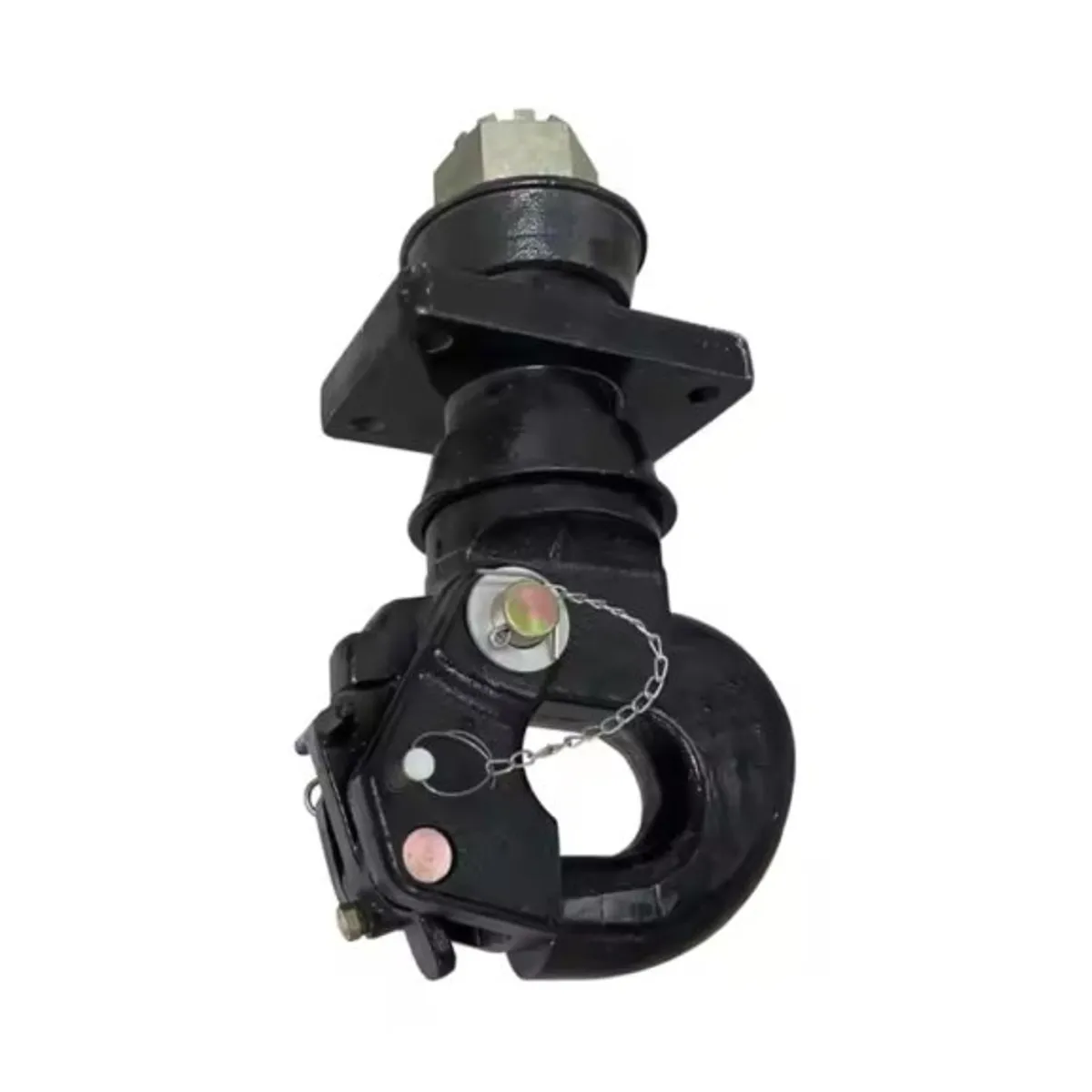
Specifications
| Coupling eye bore | 40 mm / 50 mm (DIN 74054) / 76 mm heavy-duty |
|---|---|
| Material | Forged 42CrMo / S355 alloy steel, quenched & tempered |
| D-value rating | D up to 170 kN (standard) / 250+ kN (heavy-duty) |
| Drawbar type | A-frame (V-drawbar) or single-tube rigid drawbar |
| Height adjustment | Bolted bracket, multi-hole, 50 mm increments |
| Mounting | Bolt-on or weld-on to trailer chassis |
| Surface finish | Zinc-plated or hot-dip galvanized |
| Standard compliance | ISO 1102, DIN 74054, DIN 74058 |
Drawbar Assembly Components
A complete drawbar assembly is the tube or A-frame structure that runs from the trailer's front cross-member out to the coupling eye, plus the mounting brackets, height-adjustment plate, and often a jockey wheel bracket welded near the eye end so the trailer stands level when uncoupled. On centre-axle trailers and converter dollies the drawbar takes both tension (pulling) and compression (braking, reversing) loads, which is why we forge the eye as one piece with the shank rather than welding a ring onto a bar — a welded joint is the weak point that shows up as a crack after a few years of cyclic loading. The A-frame style spreads the load into two mounting points on the chassis and resists twist better on uneven ground; a single-tube rigid drawbar is lighter and simpler where twist isn't a concern, such as short agricultural or plant trailers.
Coupling Eye Sizes and Tow Eye Compatibility
The coupling eye bore has to match the pintle hook or pin on the towing vehicle, and sizes aren't interchangeable across markets. European fleets running to DIN 74054 mostly use a 40 mm or 50 mm coupling eye on standard drawbar trailers; North American and some Middle East fleets use pintle rings closer to 3 inch (76 mm) for heavy-duty pintle hooks; off-road, logging, and military-spec drawbars often step up to the full 76 mm heavy-duty tow eye rated for higher D-values. In North America this pairing is usually called a pintle tow hitch or ring and pintle hitch — a tow hitch pintle mounted on the tractor or dolly, mated to our forged coupling eye (also called a pintle hitch ring) so the eye rides on the pintle's radius without slop, the standard coupling on heavy-duty pintle hitch trailers such as converter dollies, off-road, and military-spec rigs. Before ordering a trailer drawbar or a replacement forged drawbar eye, check the bore stamped on your existing eye or the pintle hook it couples to — an eye that's a few millimetres undersized will hammer against the pintle hook and wear both parts out fast, while an oversized eye adds slop that shows up as banging on rough roads.
Reading the D-Value on a Tow Coupling
Every coupling eye rated to ISO 1102 carries a D-value stamped into the forging — a single number that represents the theoretical reference force combining the towing vehicle and trailer weight and their braking behavior, not a simple maximum tow weight. A D-value of 170 kN covers most tandem-axle drawbar trailers up to around 34 tonnes gross combination weight; heavy-haul dollies and mining trailers need eyes forged and rated above 250 kN. Never fit a coupling eye with a D-value lower than what the trailer's data plate calls for, and don't assume two eyes of the same bore diameter carry the same rating — wall thickness and forging grade change the number even when the pin fits the same pintle hook.
Height Adjustment and Fitting a Drawbar Assembly
Coupling height between tractor and trailer changes with tire wear, load, and which vehicle is doing the towing, so most drawbar assemblies mount through a multi-hole bracket that adjusts in 50 mm steps rather than a fixed weld height. Get this wrong and the drawbar rides at an angle, putting a bending load on the eye that it wasn't forged to take — over time that shows up as cracking at the eye-to-shank transition, the same failure point a straight pull-load never reaches. For fleets running mixed tractor heights, adjustable tow hitches paired with a multi-hole drawbar bracket give the flexibility to match coupling height across different towing vehicles without swapping the drawbar itself. When you order a replacement drawbar or coupling eye from us, give us the current mounting hole spacing and ground clearance and we'll match the bracket so height adjustment lines up with your existing setup, whether it's a bolt-on retrofit or a full weld-in axle and drawbar replacement.
Frequently Asked Questions
What size coupling eye do I need — 40mm, 50mm, or 76mm?
What does the D-value on a coupling eye mean?
Is a forged drawbar eye stronger than a welded one?
Can you supply a complete drawbar assembly, not just the eye?
How do I know if my drawbar eye is worn out?
Is a coupling eye the same as a trailer coupler?
Tell us the part you need and your destination port — we'll send specs & a quote today.
Reply within 24 hours — or WhatsApp us at +86 199 5331 6215.