
Drawbar & Coupling Guide: Types, Sizing & Maintenance
The drawbar and its coupling eye carry every pulling and braking force between a trailer or converter dolly and the vehicle towing it, which means the difference between forged and cast construction, the correct coupling eye specification, and proper drawbar height adjustment is not a cosmetic detail — it's the load path itself. This guide covers the main drawbar types, how to read a coupling eye rating, and the maintenance checks that catch wear before it becomes a coupling failure.
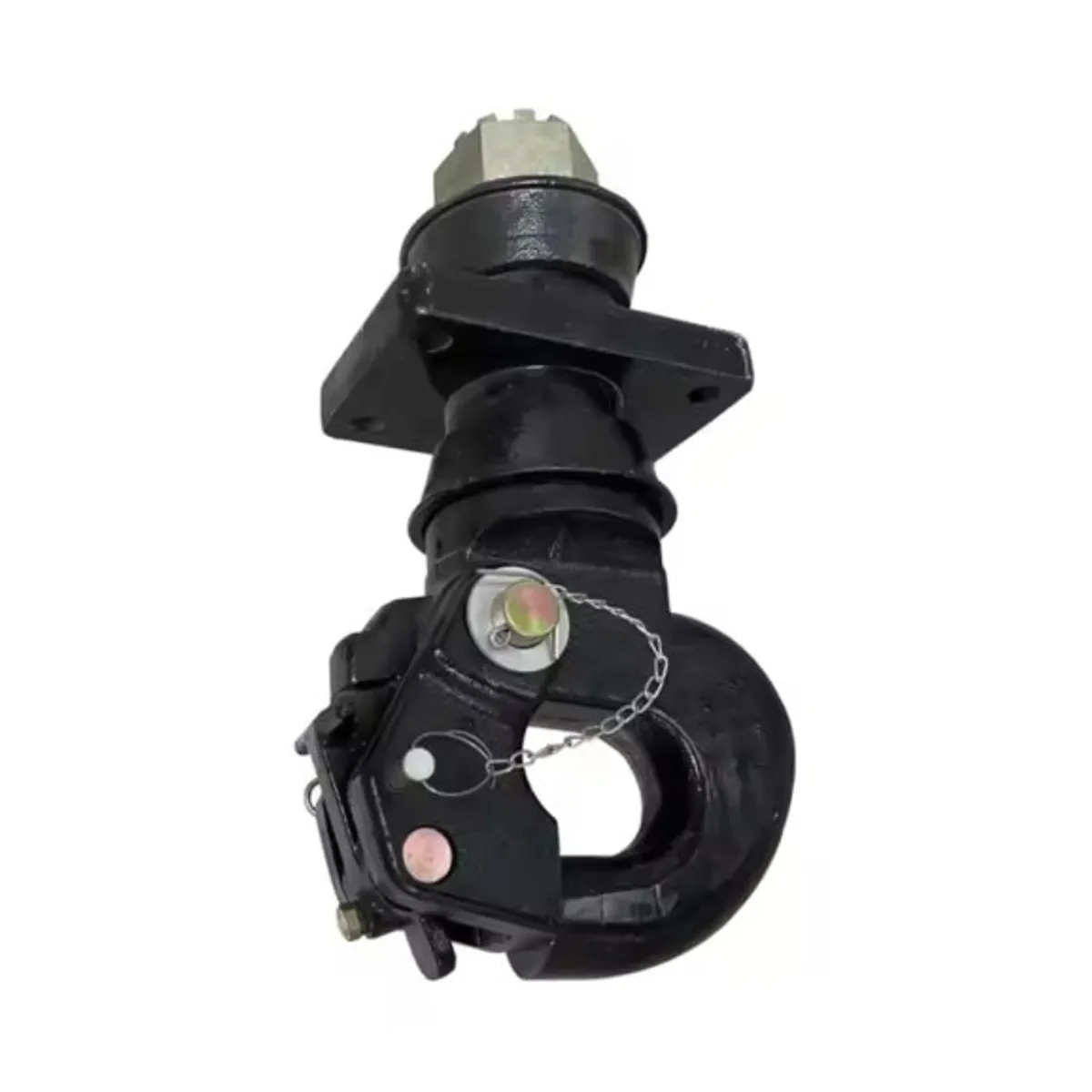
Drawbar Types: A-Frame vs Single-Tube Rigid
The two main drawbar types used on centre-axle trailers and converter dollies are the A-frame (V-drawbar) and the single-tube rigid drawbar, and the choice affects how the trailer handles under load as much as how it's built. The A-frame style splits into two arms that mount to separate points on the trailer's front cross-member, spreading pulling and braking load across two connections and resisting twist better when the trailer is running over uneven ground or off-camber surfaces. The single-tube rigid drawbar runs as one straight member from a single mounting point out to the coupling eye — lighter, simpler to manufacture, and adequate for lighter-duty applications like short agricultural or plant trailers where twist resistance isn't a major concern.
Choosing between the two comes down to the trailer's duty cycle: a converter dolly or heavy centre-axle trailer running mixed road and yard surfaces benefits from the A-frame's twist resistance, while a light trailer running smooth, consistent surfaces doesn't need the extra structure. Both types connect through the same coupling eye and bracket system, so the drawbar type choice doesn't limit which jockey wheel or coupling eye size you can pair with it.
Reading a Coupling Eye Specification
A coupling eye specification has two parts, and buyers who only check one of them end up with a mismatched or underrated coupling. The first is bore diameter — 40mm and 50mm under DIN 74054 are the common sizes across European-pattern fleets, while 76mm (3 inch) heavy-duty eyes are used on off-road, logging, military-spec, and some North American pintle-hook applications. Bore diameter has to match the pintle hook or pin on the towing vehicle exactly; an undersized eye hammers against an oversized pintle hook and wears both parts out fast, while an oversized eye adds slop that shows up as banging on rough roads.
The second part of the specification is the D-value, stamped into the forging under ISO 1102 — a reference force combining trailer and towing-vehicle weight and braking behavior, not a simple maximum tow weight. A D170 rating covers most tandem-axle drawbar trailers to about 34 tonnes gross combination weight, while heavy-haul dollies need eyes rated above D250. Two eyes of the same bore diameter can carry different D-values depending on wall thickness and forging grade, so never assume bore size alone tells you the coupling's rated capacity — check the stamped D-value against what the trailer's data plate calls for. This matches the Brazilian-market term olhal de engate, which refers to this same rated coupling eye component.
Forged vs Cast Drawbar Eye Construction
The forged vs cast drawbar eye question comes down to how the eye is joined to the shank, and it's the single biggest factor in long-term reliability. A forged eye is made as one continuous piece with the drawbar shank, with no weld or casting seam at the point where load transfers from the towing pintle through the eye into the shank. A cast eye, or a fabricated design that welds a separate ring onto a bar, introduces a joint at exactly the point carrying the highest combined tension and shear load — that joint is where cracks propagate after years of the cyclic tension-and-braking cycle every tow coupling goes through.
We forge coupling eyes as one piece with the shank for this reason, and the practical difference shows up in service life rather than in day-one performance — a cast or welded eye can pass initial testing and still develop a crack at the joint years into service, while a properly forged eye's failure mode, if it ever occurs, tends to show as gradual wear at the bore rather than a sudden crack at a weld seam. When ordering a replacement engate reboque or drawbar assembly, ask specifically whether the eye is forged as one piece or fabricated from separate components — it's not always obvious from a photo alone.
Drawbar Height Adjustment
Drawbar height changes with tire wear, load state, and which specific tractor or dolly is doing the towing, which is why most drawbar assemblies mount through a multi-hole bracket adjustable in increments rather than a fixed weld height. Getting height wrong doesn't just look untidy — a drawbar riding at an angle instead of roughly parallel to the ground puts a bending load on the coupling eye that it wasn't forged to handle, and that bending load concentrates exactly at the eye-to-shank transition where a straight pulling load would never reach. Over time this shows up as fatigue cracking in a location that a properly leveled drawbar wouldn't experience.
Check and adjust drawbar height whenever the towing vehicle changes or after significant tire wear on either the trailer or tractor, and confirm the bracket's hole spacing matches your fleet's typical coupling height range before ordering a replacement assembly — sending us your current mounting hole spacing and ground clearance lets us match the bracket correctly rather than shipping a generic height range that may not cover your actual operating conditions.
Tow Coupling Installation and Drawbar Maintenance
Tow coupling installation should always start with confirming bore diameter and D-value against the towing vehicle's pintle hook before mounting anything, since a coupling that bolts up fine but doesn't match the pintle's rated capacity is a hidden problem until it's under real load. Once bore and rating are confirmed, mounting bolts should be torqued to the bracket manufacturer's specification and rechecked after the first loaded trip, since new bolted joints can settle slightly under initial load cycles.
Drawbar maintenance afterward is mostly visual and hands-on: check the coupling eye bore for elongation or oval wear at each service interval, inspect the eye-to-shank transition for any hairline cracking, and confirm the height-adjustment bracket bolts remain torqued. Look for wear steps on the bore where the pintle pin rides — a worn eye shows up as banging or knocking when towing over rough ground, and should be replaced before wear progresses to where the pin could pull through under load. Pairing this drawbar inspection with checks on the trailer's axles and U-bolts and fasteners at the same service interval catches related wear across the whole front-end assembly in one pass rather than several separate inspections.
How the Coupling Eye Fits Among Other Trailer Hitch Coupler Types
The rigid coupling eye covered throughout this guide is only one branch of a much larger family of trailer coupling hardware, and buyers researching types of trailer hitch couplers for a lighter trailer often need a completely different component than the D-value-rated eye discussed above. Among the different types of trailer couplers — or different types of trailer hitch couplers — on the market, the four most common are: the ball coupler (a socket that clamps over a 2 inch, 2-5/16 inch, or 3 inch ball mounted on the tow vehicle's receiver hitch, standard on light and mid-duty single-axle and tandem trailers), the pintle-and-eye coupling described in this guide (a rigid forged eye that rides on a pintle hook rather than a ball, standard on centre-axle drawbar trailers and converter dollies), the gooseneck coupler (a ball-and-socket mounted in the bed of a pickup truck for heavy livestock and equipment trailers), and the fifth wheel coupling (a kingpin-and-jaw system used on semi-trailers). Choosing the wrong coupler family for the trailer's actual duty cycle is a common sourcing mistake — a ball coupler rated for a light single-axle trailer has nothing in common structurally with the forged D170-rated eye this guide is built around, even though both get called a trailer coupler in casual conversation.
For light and mid-duty trailers running on a ball coupler rather than a pintle eye, two pieces of related towing hardware come up constantly in buyer questions even though neither one is part of the drawbar or coupling eye itself. Trailer hitch weight distribution bars are spring bars that connect the tow vehicle's hitch head to brackets on the trailer frame, transferring tongue weight back onto the trailer's own axles and the tow vehicle's front axle instead of letting it all settle on the tow vehicle's rear axle alone — a setup that matters for heavier single-axle and tandem trailers running close to their coupler's rated tongue weight. Many weight distribution hitch systems add trailer hitch sway control weight distribution hardware as well, typically a friction or hydraulic sway bar that resists side-to-side trailer sway at highway speed, worth specifying separately from the basic spring bars if the trailer runs at speed in crosswinds. Buyers in UK and Australian markets often use 'tow bar' rather than 'trailer hitch' for the same hardware — a tow bar weight distribution hitch question is the same weight-transfer setup described above, and tow bar nose weight is simply the local term for tongue weight, the download force at the coupling that this hardware is designed to manage. None of this hardware bolts to a forged coupling eye of the kind covered in this guide; it mounts to the tow vehicle's receiver and a ball-coupler trailer tongue instead. Buyers should also confirm the types of trailer hitch electrical connections match between trailer and tow vehicle before towing — 4-pin flat connectors handle basic lighting on light trailers, while 5-pin and 7-pin round or blade connectors add electric brakes and reverse lights; a mismatched connector type is a common reason new trailer owners report a coupler problem that's actually a wiring problem.
Frequently Asked Questions
Should I choose an A-frame or single-tube rigid drawbar?
What does a coupling eye D-value rating actually mean?
Is a forged drawbar eye better than a cast one?
How often should drawbar height be checked?
What are the signs a coupling eye needs replacement?
Tell us the part you need and your destination port — we'll send specs & a quote today.
Reply within 24 hours — or WhatsApp us at +86 199 5331 6215.