
Twist Locks & Container Locks
Sigma Trailer Parts forges and machines twist locks and container locks for skeletal trailers, flatbed chassis, and container terminal equipment — from heavy duty shipping container locks rated for the busiest yards to lighter sea container locks for occasional swaps. Every twist lock ships to ISO 1161 cone dimensions so it drops straight into standard corner castings — semi-automatic, manual, or fully automatic, built to the load rating your route demands.
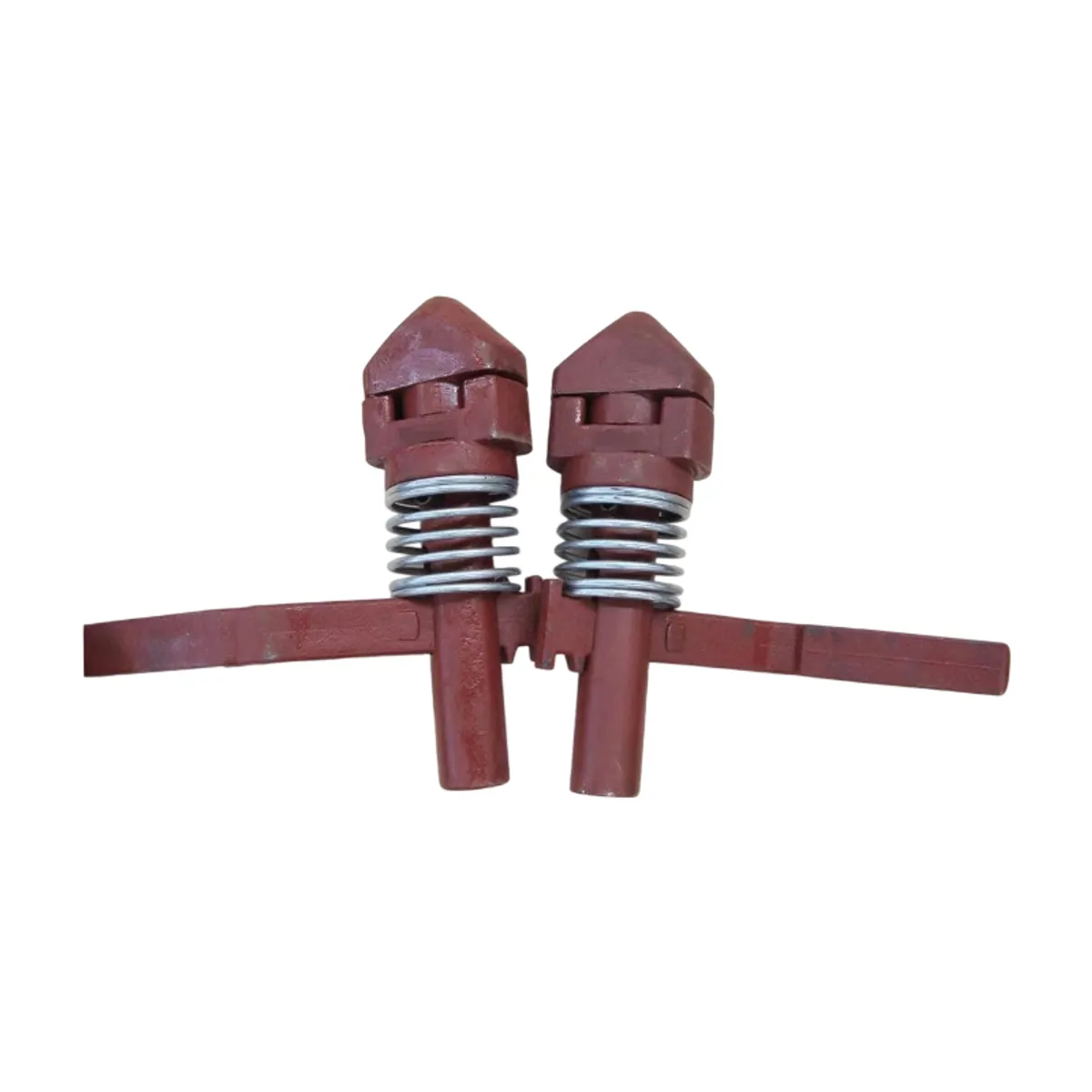
Specifications
| Body Material | Forged carbon steel (ductile iron option) |
|---|---|
| Locking Type | Semi-automatic, manual, or fully automatic |
| Standard | ISO 1161 cone and corner casting compatible |
| Surface Finish | Zinc-plated standard, zinc-nickel or painted on request |
| Container Compatibility | 20ft, 40ft, 45ft ISO containers |
| Mounting | Welded base plate or bolt-on retrofit plate |
| Testing | Batch pull-tested to rated working load |
| Packaging | Carton or wooden crate, container-load bulk |
Semi-Automatic, Manual, and Fully Automatic Twist Locks
A twist lock does one job: hold a shipping container's corner casting to the trailer bolster through the loading, hauling, and unloading cycle without letting the box shift, as the working core of any container lock system or shipping container locking system built around ISO corner castings. How that lock engages and releases is what separates the three container twist lock types we build.
The semi-automatic twist lock is the standard fitment on skeletal trailers and container chassis twist lock installations moving through ports and inland depots. Drop a container onto the bolster and the spring-loaded cone rotates and locks itself under the weight of the box — no crane operator delay, no yard hand climbing onto the chassis mid-lift. Unlocking still needs a hand on the release handle before the crane picks the container back up, which is the safety step that stops a box coming free on a bump.
A manual twist lock skips the auto-lock spring entirely. The operator turns the handle to lock on set-down and turns it again to unlock before lift-off. It costs less to produce and has fewer moving parts to service, which is why we still see steady demand for manual twist lock orders on flatbed trailers and general cargo platforms where container swaps are occasional rather than constant.
The fully automatic container twist lock mechanism locks and unlocks itself in both directions, driven by the container's own weight and the crane's lift motion. It's the automatic twist lock container yards running the highest-turnover lanes standardize on, since no yard staff need to touch the chassis at all during a swap. That trims minutes off every drop-and-hook cycle, which matters at terminals running high container turnover, but the extra mechanism means a higher unit cost and a more demanding maintenance schedule than the semi-automatic version.
Fleet buyers usually mix types across a yard: fully automatic on the busiest chassis lanes, semi-automatic as the default across the rest of the fleet, manual on older flatbed trailers being phased into container work. We build all three to the same forged-steel core, so wear parts and replacement handles interchange across a mixed fleet instead of forcing you to stock three separate parts catalogs. We also supply double ended container twist locks — sometimes ordered as a double twist lock container unit or an intermediate twist lock for mid-stack positions — with a locking cone on each end for container-to-container stacking rather than a bolster mount, unlike the semi-automatic base twistlock and bolt-on units described above that are built for chassis mounting. Combined with our container corner castings, the twist lock family here covers a full container-securing retrofit or new-build order.
Built to ISO 1161 Cone and Corner Casting Dimensions
Every one of our ISO container twist locks starts from the ISO 1161 corner casting geometry, not the other way around. The standard fixes the aperture size, wall thickness, and hole spacing on a container's corner casting, and the twist lock's cone has to land inside that geometry with enough clearance to rotate and enough steel to hold the rated load — get either number wrong and the lock either won't seat or won't release cleanly under a loaded crane.
Because the geometry is fixed by the standard, a corner casting twist lock from one supplier should drop into a corner casting from any other compliant supplier. In practice we see enough variance in casting tolerances across the industry that mismatched cone-to-aperture fits are a common cause of jammed unlocking handles on job sites, not a design flaw in twist locks themselves. We check aperture fit against sample corner castings before a production run ships, and we machine the cone radius on the same tooling line we use for our own corner castings, so a customer ordering both together gets a matched twist lock corner casting set rather than two parts bought to spec sheets that don't quite agree in the field.
For export orders, this matters more than it sounds. A twist lock heading to a fleet running mixed container ages — some ten years old, some new — needs enough tolerance built into the cone to seat reliably across castings that have seen a decade of yard wear, corrosion, and repaint. We build in that margin rather than machining to the tightest possible fit, because a twist lock that locks on a brand-new corner casting but binds on a weathered one is a yard problem waiting to happen, not a spec sheet win.
Where Twist Locks Mount on a Trailer
Sourcing container twist locks for trailers means matching lock count to bolster span: a 20ft container needs four twist locks, one at each corner of the bolster; a 40ft or 45ft container spans two bolsters and uses eight. We also supply shipping container side twist locks on the same forged base for fleets running side-lashing configurations instead of standard corner mounts. The mounting position — welded base plate into the chassis frame, or a bolt-on plate for retrofits — decides whether you order the twist lock alone or the lock with its base plate as one unit.
New-build skeletal trailers usually take weld-on container twist locks set into a welded-in housing during frame fabrication so the lock sits flush with the bolster deck. Retrofits and repairs go the other way: bolt on twist locks — sometimes called a boltable twist lock — use a base plate, sometimes ordered as container twist lock blocks, that lets a yard swap a worn unit without cutting into the chassis frame, which is the version most of our repeat orders are for. We supply both, and we cut the base plate to the bolster hole pattern a customer sends us rather than shipping a generic plate and leaving the driller to figure out spacing on site.
Gooseneck and lowbed trailers running occasional container loads use fewer, often just a rear set matched to a fixed front stop, since the load doesn't need four-corner twist lock security on every haul. Whatever the configuration, we match twist lock count and mounting pattern to the bolster drawing a customer provides — including container lock on trailer layouts that mix corner and side mounting — rather than shipping a fixed four-pack and leaving fitment to guesswork during container twist lock installation — a habit that saves a container yard from finding out mid-installation that the bolt pattern is off by 20mm.
Material, Coating, and Load Testing
We forge the twist lock body from carbon steel rather than casting it, because a forged cone holds up better against the shear load a locked container puts through it during hard braking or a rough transfer. Ductile iron versions exist and cost less, but we steer fleet customers running high-cycle container work toward the forged option — the failure mode on a cast lock under repeated shock load is a hairline crack that's invisible until it isn't.
Surface treatment is zinc-plated as standard, which holds up through normal yard and coastal exposure; customers shipping into humid West African or Southeast Asian ports often step up to a heavier zinc-nickel coating or a painted finish over the plating for the extra corrosion margin. Either way, the coating goes on after machining, not before, so the cone and locking faces keep their exact tolerance instead of picking up a few thousandths of paint buildup that turns into a binding handle six months in.
The same forged design also serves as a container ship twistlock and container spreader twist lock in terminal and vessel lashing, not just trailer bolster mounting — the load path through the cone is identical regardless of what the container is locked to. Every production batch gets pull-tested to its rated working load before it ships, and we can supply the test report alongside the shipment — the same practice we run on our u-bolts and fasteners line, since both parts carry safety-critical loads a fleet can't afford to have fail quietly.
Ordering Twist Locks in Bulk
Most of our twist lock and container lock orders leave the Liangshan workshop in bulk — container yards restocking a full fleet, chassis builders speccing a new production run, or trading companies sourcing cargo container locks and cargo container twist lock inventory, including shipping container twist locks for sale by the container-load, ahead of a shipping season. Among container twist lock suppliers, we forge, machine, plate, and test in-house, which keeps a full container-load order on one production schedule instead of chasing parts across three subcontractors.
Custom cone dimensions, handle length, or base plate patterns are normal requests, not exceptions — send a drawing or a sample from your current supplier, including a Tandemloc twist lock sample, and we'll match it rather than asking you to redesign your chassis around our catalog part. For fleets standardizing spares across a yard, we also pack twist locks into our spare parts kits alongside corner castings and fasteners, so a restocking order arrives as one shipment instead of three separate line items on three separate invoices. Full production and packaging detail is in our twist lock and container lock buying guide.
Frequently Asked Questions
What's the difference between a semi-automatic and a fully automatic twist lock?
How many twist locks does a 40ft container need?
Are your twist locks compatible with any ISO container?
Can you supply twist locks with a custom base plate to match our existing bolster holes?
What's the minimum order for container locks?
Are twist locks, container locks, and shipping container locks the same thing?
Is a twist lock the same as a container stacking pin?
What determines container twist lock price?
Can you supply a JOST-compatible twist lock?
Tell us the part you need and your destination port — we'll send specs & a quote today.
Reply within 24 hours — or WhatsApp us at +86 199 5331 6215.