
Trailer Brake Systems — Drums, Shoes, Chambers & S-Cam Kits
The trailer brake system is the one part of the trailer that cannot fail quietly. Every drum, shoe, chamber, and S-camshaft we build at our Liangshan plant is sized to a specific axle load and matched to the friction standard the truck's air system expects — not sold as a generic fit. If you run a fleet across rough African or Middle Eastern haul routes, brake wear is a maintenance-schedule problem, not an emergency, only when the parts are right to begin with.
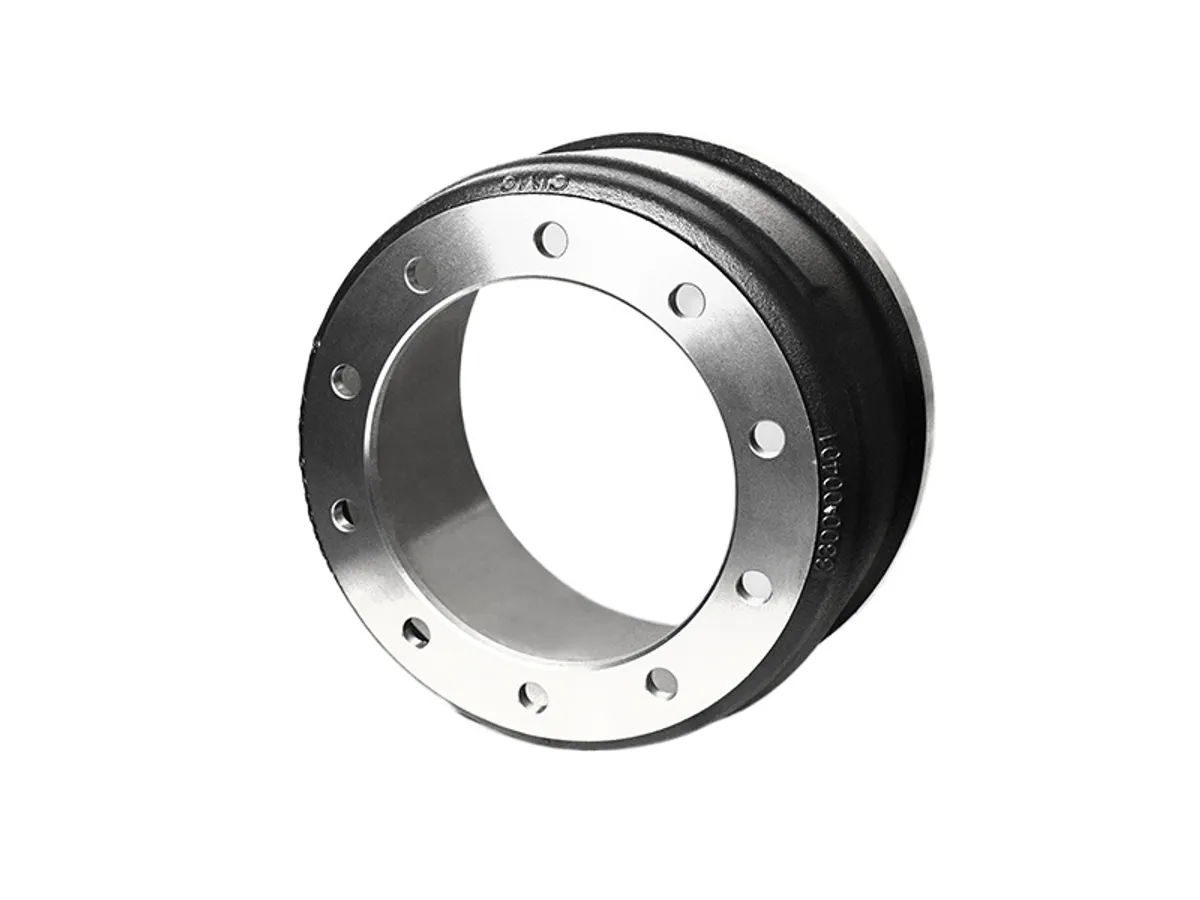
Specifications
| Brake type | S-cam drum brake, air-actuated |
|---|---|
| Drum size | 420mm x 180mm / 430mm x 200mm (fits 9t–13t axles) |
| Lining material | Non-asbestos woven/molded, high-friction compound |
| Chamber type | Type 20 / 24 / 30, service and spring (parking) chambers |
| Camshaft | 28-spline and 10-spline S-cam, forged steel, induction-hardened |
| Axle compatibility | BPW, SAF, Fuwa, York, JOST equivalents |
| Standard | Friction performance to FMVSS 121 / ECE R13 |
| Quality control | Batch friction-coefficient testing, dynamic balance on drums |
How a Trailer Brake System Works
A semi trailer brake system is an air-actuated drum brake, and understanding the air brake system on trailer axles means following one mechanical chain from start to finish. The driver's foot valve sends compressed air from the trailer air tank to the brake chamber mounted on the axle. Air pressure pushes the chamber's pushrod outward, which rotates the slack adjuster arm. The slack adjuster is keyed onto the S-camshaft, so as it rotates, the S-cam turns inside the brake assembly.
The S-cam brake's lobe profile is not round — it is shaped so that a small rotation produces a large outward spread of the brake shoes. As the cam turns, it forces the two brake shoes apart, pressing the friction lining bonded to each shoe against the inside face of the rotating brake drum. That contact is what converts the trailer's kinetic energy into heat and brings it to a stop. Release the air, return springs pull the shoes back off the drum, and the wheel spins free again.
Every part in that chain has to be sized correctly for the other parts. A chamber with too little push force will not fully seat the shoes under a loaded trailer. A drum bored for the wrong diameter will contact the lining unevenly and glaze it. We build and sell drums, shoes, chambers and camshafts as a matched system for exactly this reason — mixing brands on one axle end is where premature wear and pulling almost always starts.
Trailer brakes also have to work in balance with the tractor's own brakes, not in isolation. Most jurisdictions require the trailer's brake timing and force to be proportioned so the trailer contributes its fair share of stopping power without over-braking and causing the trailer to push the tractor, or under-braking and leaving the tractor's brakes to absorb load they were not sized for. This is one reason we manufacture to a stated friction coefficient range rather than letting lining compound vary batch to batch — a fleet running mixed trailer ages and brands needs every axle's brake response to land in the same band, or trailer sway under hard braking becomes a real risk on a multi-trailer combination.
Air-actuated S-cam drum brakes trailer fleets running tandem and tridem axles depend on are the standard for the tonnes-class axle loads this page covers, which is why sourcing trailer brakes and drums as a matched set matters more than buying either part alone. Lighter box trailers, boat trailers, and car trailers under about 3.5 tonnes GVM more often run electric brakes (a magnet-actuated drum) or a trailer with hydraulic brakes fed by a surge coupling or an electric-hydraulic actuator — different actuation entirely, even though the drum, shoe and lining principle inside the brake itself is similar. If you're sourcing parts for a hydraulic or electric braked light trailer rather than an air-braked semi-trailer axle, tell us the actuation type up front, since chambers and slack adjusters are unique to the air system and don't cross over.
Brake Drums: Sizing and Material
Semi trailer brake drums — sometimes called a tractor trailer brake drum, since the terms are used interchangeably across the industry — are cast from pearlitic gray iron or ductile iron, chosen for its ability to absorb and dissipate heat without cracking under repeated hard stops. The two sizes that cover the overwhelming majority of semi-trailer axles are 420mm x 180mm and 430mm x 200mm, matched to 9-tonne and 11–13-tonne axle ratings respectively. Ordering the wrong drum diameter for the axle brand is the single most common fitment mistake we see — a drum that is 10mm off in bore diameter will not seat the shoes evenly, and the lining wears in a taper within a few thousand kilometers.
We machine each drum to the axle manufacturer's original bore tolerance and dynamically balance it before it leaves the plant, because an out-of-balance drum shows up as steering-axle vibration and uneven lining wear long before it shows up as a measurable defect on a caliper. Drums that run hot from overloading or dragging brakes develop heat checking — fine radial cracks on the friction face — and once that starts, the drum's heat capacity drops further on every subsequent stop. We recommend inspecting drum surface condition at every lining change, not just when a driver reports noise.
Fitment note: always confirm your axle brand (BPW, SAF, Fuwa, York, JOST) and bolt pattern when ordering — see our full trailer axles range for the axle side of this pairing.
A worn drum can sometimes be machined oversize to true up a scored friction face, but only within the manufacturer's stated maximum rebore limit — typically 1.5mm to 2mm over nominal bore, stamped or cast into the drum itself. Beyond that limit, the drum wall is too thin to dissipate heat safely and must be scrapped rather than reused, no matter how good the machined surface looks. We supply new drums at OEM nominal bore rather than pre-worn stock, so fleets rebuilding a full axle get full rebore margin for the drum's next service life, not a drum that is already close to its scrap limit on day one.
Brake Shoes, Linings and Pads — What's the Difference
On a drum brake, the friction material is bonded or riveted onto a curved steel brake shoe — this is what most people mean when they say "trailer brake pads" or brake shoes for a trailer, even though pad technically refers to disc brake hardware. A trailer brake pad, in practice, almost always means this same shoe-and-lining assembly — very few semi-trailer axles run true disc brakes with a caliper and pad. We supply both riveted-lining shoes, which allow the worn lining to be replaced on the same shoe core, and pre-bonded shoe assemblies for fleets that prefer to swap the complete unit and inspect the old core off-vehicle.
Lining compound matters more than most buyers expect. A soft, high-friction compound bites faster and stops shorter, but wears out sooner and can fade under sustained heavy braking on long descents. A harder compound lasts longer and resists fade but needs more pedal effort and a properly adjusted slack adjuster to reach full stopping force. We manufacture non-asbestos woven and molded linings rated for standard highway duty, and recommend the harder compound for mountainous or mining routes where trailers run loaded downhill for extended stretches.
Wear indicators are simple to check without tools: minimum lining thickness is typically 5mm measured at the thinnest point, and any shoe with lining worn unevenly from tip to heel points to a drum, chamber, or slack adjuster problem elsewhere in the system, not just a shoe due for replacement. Replace shoes in axle sets, not individually — braking force needs to be symmetrical side to side or the trailer will pull under hard braking.
Riveted shoes and bonded shoes differ mainly in rebuild economics rather than raw stopping performance. A riveted lining can be drilled out and a fresh lining riveted onto the same steel shoe core, which suits fleets with an in-house brake shop and a supply of new lining stock. A bonded shoe is glued under heat and pressure at the factory and is not practically re-lined in the field, so it is sold and replaced as a complete assembly. We stock both formats and can advise which suits a given workshop's rebuild capability, since buying riveted cores without the tooling to actually rivet them saves nothing.
Brake Chambers and Spring Brakes
The trailer brake chamber converts air pressure into the mechanical push that moves the slack adjuster, and it's the single part most buyers mean when they search for a brake chamber trailer replacement or ask how an air brake trailer actually stops. Chambers are sized by type number — Type 20, 24, and 30 are the common trailer sizes — where the number roughly correlates to the effective diaphragm area and therefore the force delivered at a given air pressure. A trailer axle rated for higher gross weight needs a larger chamber to generate enough clamping force through the same S-cam geometry; undersizing the chamber is a quiet way to end up with brakes that technically work but never reach full stopping force.
Most trailer axles use a spring brake chamber, which combines the service chamber with a caged spring parking section. Air pressure holds the parking spring compressed during normal driving; when air pressure is released — intentionally by the parking brake valve, or unintentionally by a line failure — the spring extends and applies the brakes automatically. This fail-safe design is why trailer brakes are inherently "applied when uncoupled" and why a chamber with a corroded or damaged spring cage is a genuine safety issue, not a maintenance nicety.
We manufacture chambers with a corrosion-resistant coated housing and buna-N or EPDM diaphragms depending on climate exposure — coastal and high-humidity markets should specify the coated housing option at order time. Diaphragms are a wear item on any air brake system; expect to inspect them at every major brake service and replace on any sign of cracking or air leak at the clamp band.
One safety point worth stating plainly: a spring brake chamber must never be disassembled with hand tools alone. The parking spring inside is compressed with tremendous stored force, and releasing the clamp band or push rod without a proper caging tool has caused serious injuries in workshops that treated it like an ordinary air chamber. Every spring chamber we ship includes the correct caging bolt hardware, and any technician unfamiliar with the procedure should follow the axle or chamber manufacturer's release sequence exactly rather than improvising.
Fitment: Matching Brake Parts to Your Axle Brand
Trailer axle brands each use a slightly different camshaft spline count, chamber mounting bracket, and drum bolt circle, even where the overall brake geometry looks similar. BPW and SAF axles are common across European-built trailers and their Chinese-market equivalents; Fuwa, York, and JOST cover the bulk of trailers built in China and exported to Africa, the Middle East, and Latin America. Before ordering brake parts, we always ask for the axle brand and rated capacity stamped on the axle beam — this single piece of information avoids nearly every fitment return we process.
For fleets running mixed axle brands, we stock cross-reference kits that bundle a drum, shoe set, semi trailer brake chamber, and camshaft matched to one specific axle model — a complete brake assembly for trailer axles rather than loose parts — so a workshop sourcing aftermarket trailer brakes can order by axle rather than by individual part number. This is the same approach we use for our trailer spare parts kits, which bundle brake, suspension, and coupling wear items for a full axle service in one shipment.
If you are re-lining an older trailer and are not certain of the original axle brand, send us a photo of the axle tag or the drum casting marks — we can usually identify the fitment from that alone and confirm before you place the order, which matters most for CIF shipments where a wrong-fit part sitting in a container at the destination port costs weeks, not days.
Regional standards also affect how a part is marked and tested, even when the physical fitment is identical. Markets that follow FMVSS 121 and markets that follow ECE R13 apply different friction and burnish test procedures to certify a lining compound, so a lining developed and documented for one standard may need re-testing paperwork for the other even though the material itself performs the same on the vehicle. We can supply test documentation to either standard on request, which matters for fleets that need it for customs clearance or a buyer's own quality audit rather than for the part's actual on-road performance.
Trailer brake lights are a separate system entirely from everything covered on this page — the mechanical brake system stops the trailer, while brake lights and turn signals are wired through the lighting and electrical harness to warn following traffic. Both need checking together at every service, since a trailer with worn brake pads but a burnt-out brake light bulb is still an on-road hazard, just a less obvious one.
Frequently Asked Questions
What is the difference between a brake drum and a brake disc on a semi trailer?
How often should trailer brake shoes and linings be replaced?
What size brake chamber does my trailer need?
Can I fit BPW brake parts on a Fuwa or York axle?
Do you supply complete brake rebuild kits or only individual parts?
How do you adjust trailer brakes?
Tell us the part you need and your destination port — we'll send specs & a quote today.
Reply within 24 hours — or WhatsApp us at +86 199 5331 6215.