
Twist Lock & Container Lock Guide: Types & Installation
The twist lock is the small rotating fitting that's the only thing physically holding a shipping container onto a chassis or trailer, and choosing the wrong twist lock types for a fleet's operation shows up as slower turnaround at every terminal stop or, worse, as a container that isn't actually secured the way the driver assumed. This guide compares manual, semi automatic, and fully automatic twist locks, covers the ISO standard they're built to, and walks through installation basics.
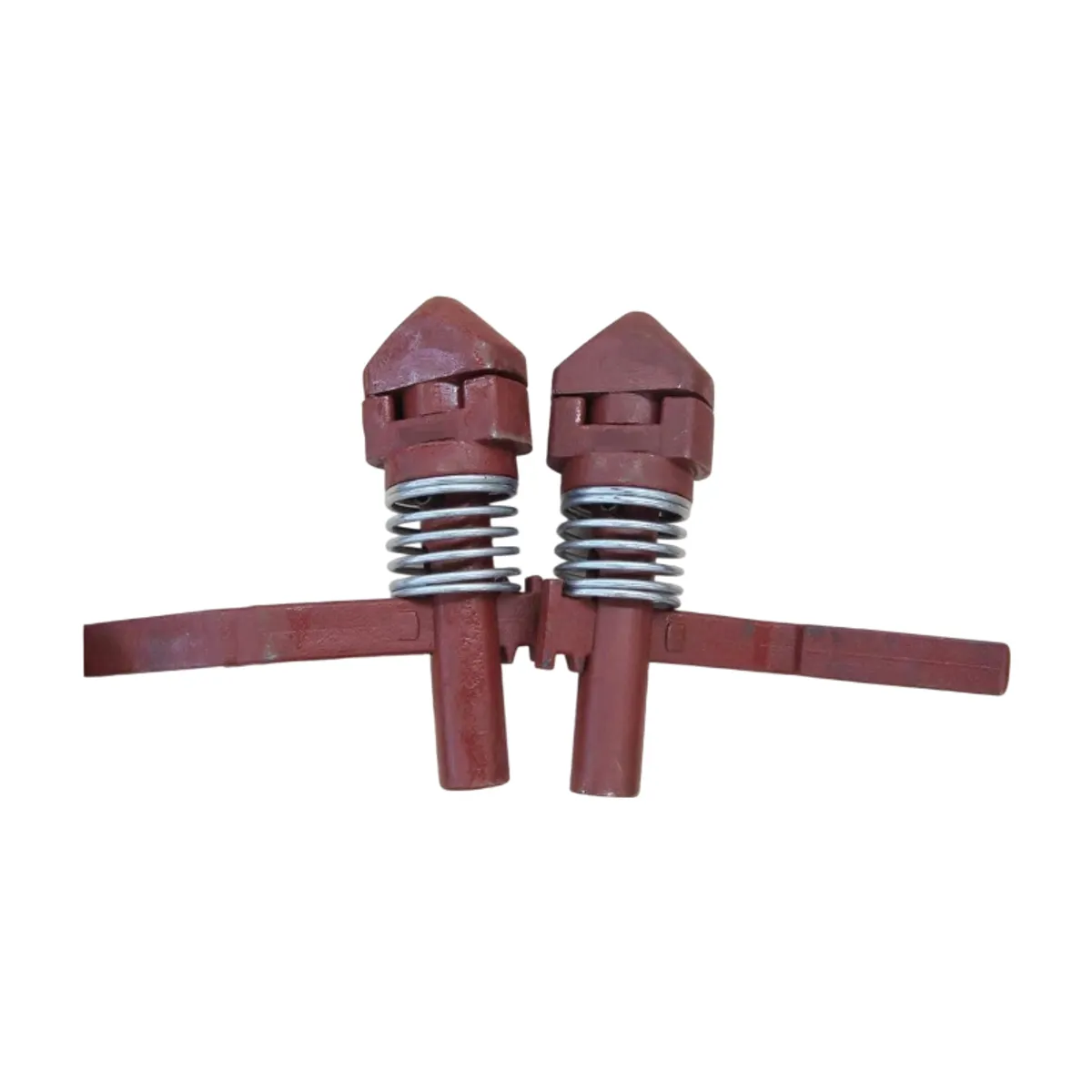
Twist Lock Types Overview
The three main twist lock types in use on container chassis and trailers differ primarily in how much manual operation they require. Manual twist locks are the simplest design — a rotating cam that the driver turns by hand using a handle or bar, engaging the lock into the container's corner casting. They're the lowest-cost option and mechanically the most straightforward to maintain, which is why they remain common on chassis that don't change containers frequently enough to justify a faster system.
Semi automatic and fully automatic types trade higher unit cost for faster, safer container changeovers, which matters most on operations doing frequent drop-and-hook container swaps at ports and rail yards where minutes per stop add up across a fleet's daily cycle count. Choosing between the three types should be based on how often a given trailer actually changes containers, not just upfront cost — a chassis that swaps containers multiple times a day pays back the cost difference of a faster lock system quickly in reduced dwell time. Fleet buyers researching the different types of twist locks before writing a spec sheet will find the market splits cleanly into these three categories, with no meaningful middle ground beyond speed and automation level.
Semi Automatic vs Manual Twist Lock
The semi automatic vs manual twist lock comparison mainly comes down to where the driver stands during operation. A manual twist lock requires climbing onto the chassis or reaching up to each of the four corners individually to rotate the lock by hand — functional, but it puts the driver in an awkward position at height and takes noticeably longer per changeover, especially in bad weather or on a wet chassis deck. A semi automatic twist lock links all four corner locks to a handle or lever the driver operates from ground level, rotating all locks together in one motion without climbing onto the trailer at all.
The safety argument for semi automatic locks is as strong as the speed argument — removing the need to climb onto a chassis bed to manually rotate each corner lock cuts one of the more common sources of yard injuries in container operations. For fleets weighing the upgrade, the deciding factor is usually changeover frequency: an operation swapping containers several times a shift sees the time and safety benefit pay for the equipment difference quickly, while a chassis that rarely changes containers may not need to upgrade from manual locks at all.
Fully Automatic Twist Lock Systems
The fully automatic twist lock goes a step further than semi automatic, requiring no manual driver operation at all. These systems use the container's own weight combined with a spring-loaded cam mechanism — lowering a container onto the chassis automatically engages the lock, and lifting the container back off automatically disengages it, with no handle, lever, or driver action needed at either end. This is the fastest changeover option and eliminates the risk of a driver forgetting to fully engage or disengage a lock manually, which is a real failure mode with manual and even semi automatic systems under time pressure.
Fully automatic systems cost more per unit and have more moving parts in the spring and cam mechanism, which means the container locking mechanism itself needs more careful periodic inspection to confirm springs haven't weakened and the cam still engages fully under the container's rated weight. For high-cycle terminal and intermodal operations where speed and driver safety outweigh the higher unit and maintenance cost, fully automatic is increasingly the standard specification on new chassis builds.
ISO Twist Lock Standard and Corner Casting Compatibility
Regardless of automation level, every twist lock has to physically mate with the container's corner casting, and that geometry is fixed by the ISO twist lock standard — ISO 1161 specifies the corner casting dimensions and the twist lock's engaging geometry so that containers from any manufacturer, anywhere in the world, seat correctly on any compliant chassis. A twist lock built to a non-standard or approximate geometry might seat on some corner castings and not others, which is a serious risk when a fleet is handling containers from mixed sources rather than a single known supplier.
When ordering replacement twist locks, confirm they're certified to the ISO standard rather than just visually similar to the existing locks on a chassis — dimensional tolerance on the locking cam and the base plate both matter for a secure fit, and we test every twist lock batch against ISO corner casting dimensions before it ships alongside our container corner castings for exactly this reason.
Twist Lock Installation
Twist lock installation starts with confirming the bolster or gooseneck mounting pattern matches the twist lock base plate — most chassis use a standard bolt pattern, but base plate thickness and hole spacing can vary between manufacturers, so measure the existing mounting before ordering a replacement rather than assuming universal fit. For semi automatic systems, the linkage rods connecting the driver handle to each corner lock also need correct length and free movement, since a linkage that binds partway through its travel prevents all four locks from fully engaging together even if each lock functions correctly on its own.
After installation, cycle every lock through a full engage-and-disengage motion under no load before putting the chassis into service, checking that all four corners move together on semi automatic systems and that each lock fully seats on manual systems. This catches a misaligned linkage or a lock installed slightly out of position before it becomes a problem with a loaded container at a terminal, where a lock that doesn't fully engage is far harder to diagnose and fix.
Frequently Asked Questions
What's the difference between semi automatic and manual twist locks?
Are fully automatic twist locks worth the extra cost?
What is the ISO standard for twist locks?
How do I know if a twist lock is properly installed?
What maintenance does a container locking mechanism need?
Tell us the part you need and your destination port — we'll send specs & a quote today.
Reply within 24 hours — or WhatsApp us at +86 199 5331 6215.