
Trailer U-Bolt & Fastener Guide: Specification & Torque
A u bolt looks like the simplest part on a trailer's suspension, but getting the u bolt specification, torque, and sizing wrong is one of the most common causes of a spring that shifts on the axle or a fastener that snaps under repeated load cycling. This guide covers how to read a u bolt spec correctly, the torque values that keep a spring seated, axle u bolt sizing, grade 8.8 fastener strength, and when a worn center bolt needs replacing.
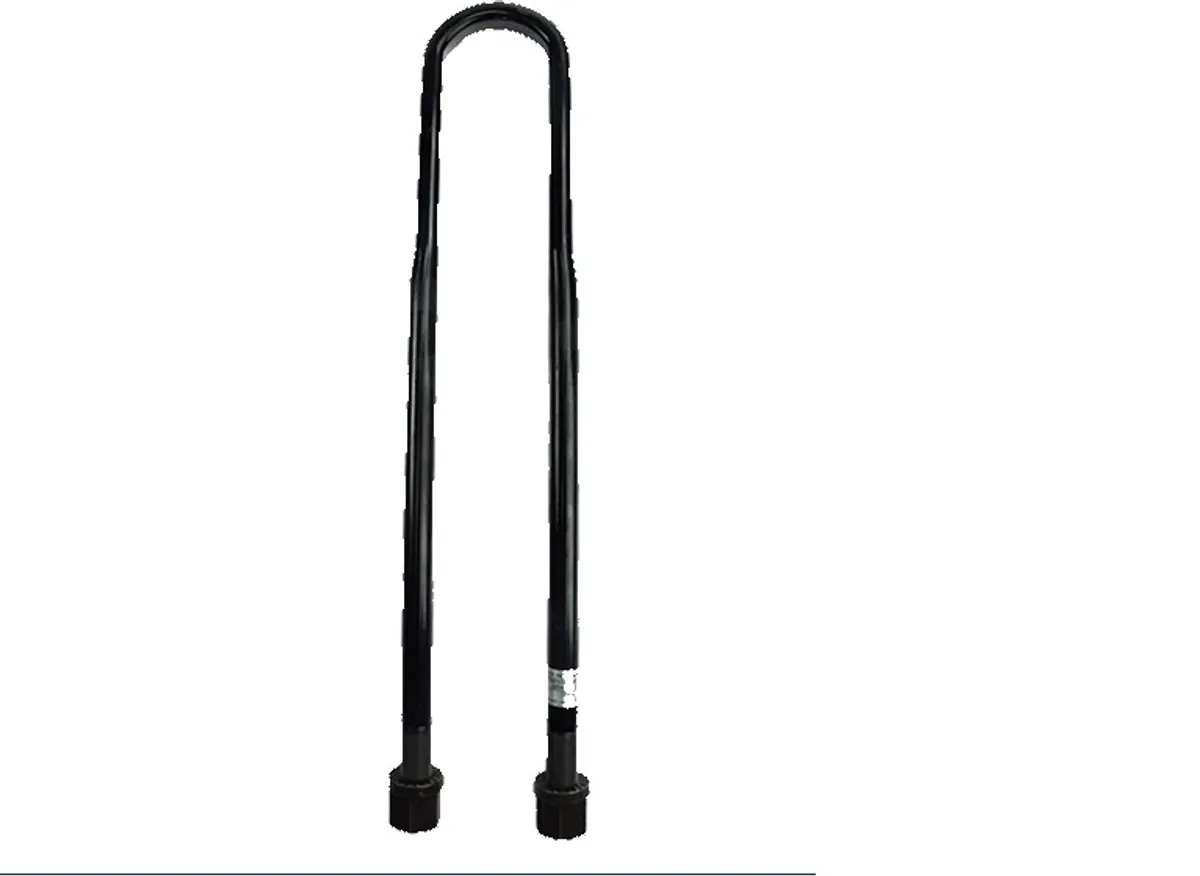
Reading a U Bolt Specification
A complete u bolt specification has four dimensions that all have to be correct together, not just the one that's easiest to measure. Thread diameter and thread pitch determine which nuts fit and how much clamping force the bolt can develop before the threads strip. Inside width is the clear opening between the two legs of the u bolt, which has to be wide enough to fit around the axle tube and the spring pack stacked together, with no gap that would let the assembly shift under load. Overall leg length determines how much thread is available above the mounting plate for the nut and any washer stack, and a u bolt that's too short won't leave enough thread engagement once torqued, while one that's too long leaves excess thread that can interfere with other components.
Ordering a u bolt by diameter alone and assuming the rest will fit is one of the most common sourcing mistakes we see — inside width in particular varies with axle tube diameter, and a u bolt sized for a different axle tube can look almost right while failing to clamp the spring pack properly. Always confirm axle tube diameter and spring pack thickness together with thread specification before ordering, and treat these as a matched set rather than four independent choices.
Spring U Bolt Torque
Spring u bolt torque is specified by the manufacturer for a reason beyond generic tightness — correct torque is what generates the clamping force holding the spring pack, axle seat, and u bolt together as a rigid assembly that can transmit braking and cornering loads without the spring shifting on the axle. Under-torquing leaves the assembly able to shift slightly under load, which shows up over time as wear at the spring seat and eventually as a spring that's visibly out of position. Over-torquing stretches the bolt beyond its elastic range and weakens it permanently, even if it doesn't fail immediately — the bolt can then fail later at a torque value well below its original rating.
U bolts should always be torqued in the correct sequence — typically alternating between the two nuts on each bolt and between adjacent bolts rather than fully tightening one side before starting the next — to seat the spring pack evenly rather than cocking it to one side. Critically, torque should be rechecked after the first loaded trip following any spring or u bolt replacement, since a new spring pack settles slightly under initial load cycles and often needs a re-torque within the first short service interval to restore full clamping force. Skipping this recheck is a common reason u bolts that were correctly torqued at installation are found loose at the next scheduled service.
Axle U Bolt Sizing
Axle u bolt sizing depends on the combination of axle tube diameter and spring pack thickness, since the u bolt clamps both as a single stack rather than fitting around the axle alone. Different axle types — American-pattern round tube axles, German-pattern axles, and spoke-type axles — commonly use different tube diameters even at similar load ratings, so a u bolt sized correctly for one axle style may not fit another even on trailers with a similar overall capacity.
When ordering replacement u bolts, provide the axle tube outside diameter, the spring pack thickness (measured with all leaves stacked as installed), and the mounting plate thickness if applicable, rather than just the trailer's tonnage rating. We size u bolts against this combined measurement for every leaf spring and axle combination we supply, since tonnage rating alone doesn't determine the physical dimensions a u bolt needs to clamp correctly.
High Strength Fasteners: Grade 8.8 and Above
High strength fasteners grade 8.8 or higher are the standard specification for u bolts and other suspension fasteners carrying cyclic load, and the grade marking matters because it directly determines tensile strength and how much torque the fastener can safely absorb before yielding. Grade 8.8 bolts are quenched and tempered alloy or medium-carbon steel rated to hold significantly more load than a lower commercial grade bolt of the same diameter, and for heavier trailer applications, grade 10.9 fasteners are sometimes specified where even higher strength is needed in the same physical size.
Substituting a lower-grade fastener to save cost on a suspension u bolt is one of the more dangerous shortcuts we see in the aftermarket parts market, because a lower grade bolt can look physically identical to grade 8.8 — same diameter, same thread — while having meaningfully less strength under the exact cyclic loading a u bolt experiences constantly. Always check for the grade marking stamped on the bolt head, and source u bolts from a supplier who can confirm material certification, not just visual or dimensional matching.
Center Bolt Replacement
The center bolt is a smaller but equally critical fastener that runs vertically through the spring pack, aligning the individual leaves and locating the pack correctly onto the axle seat before the u bolts clamp everything down. Center bolt replacement is needed whenever a spring pack is disassembled for leaf replacement or when the existing center bolt shows shear damage, elongation of its head, or a sheared-off head — a failure mode that happens when the spring pack shifts under load and puts shear force on a bolt that's designed primarily to locate the pack, not carry ongoing structural load.
When replacing a center bolt, match the original diameter and length exactly, since a center bolt that's too long can interfere with the axle seat and prevent the u bolts from clamping down fully, while one that's too short won't properly locate the spring pack leaves before the u bolts are torqued. Always replace the center bolt at the same time as any leaf spring service, even if the existing one looks intact, since it's a low-cost part relative to the labor of reassembling a spring pack a second time if it turns out to be worn.
Frequently Asked Questions
What dimensions do I need to order the correct u bolt?
How do I know if my u bolts are torqued correctly?
Why do different axles need different size u bolts?
Why does the fastener grade matter for u bolts?
When should a spring pack's center bolt be replaced?
How does u-bolt and center bolt replacement cost compare to spring bushing replacement?
Tell us the part you need and your destination port — we'll send specs & a quote today.
Reply within 24 hours — or WhatsApp us at +86 199 5331 6215.