
Trailer Turntable & Slewing Ring Guide
A trailer turntable lets a multi-axle dolly or steering bogie pivot under a long or oversized load, and the slewing ring bearing at its core is one of the more expensive components on the trailer to replace — which makes lubrication and routine maintenance a far better investment than waiting for a failure. This guide covers how the slewing ring works, how to size turntable load capacity, and the maintenance routine that keeps a turntable turning smoothly for years instead of seizing or developing play.
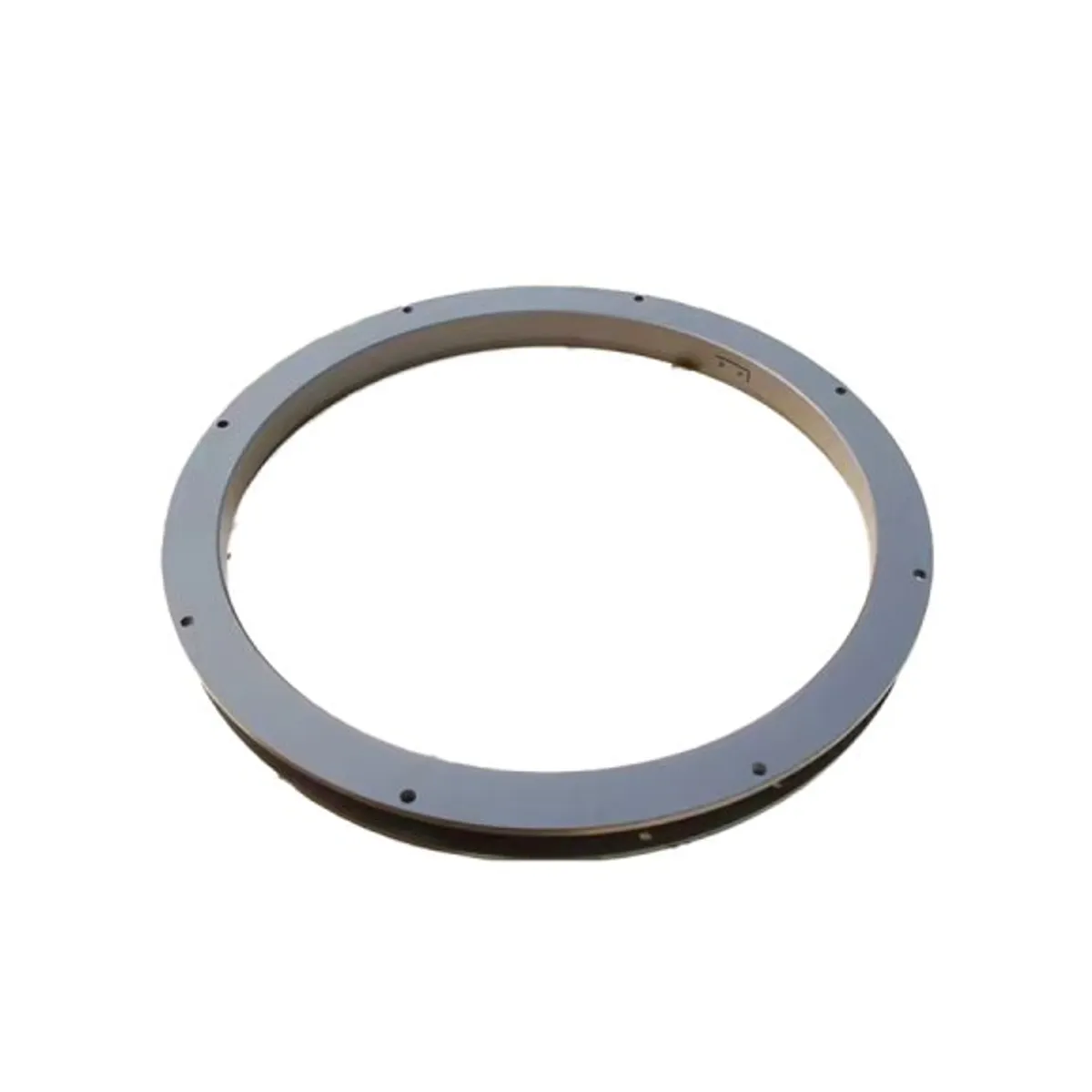
How a Trailer Turntable Works
A trailer turntable is the rotating platform, typically mounted on a converter dolly or steering bogie, that allows the rear or intermediate axle group of a long combination or oversized-load trailer to pivot independently of the frame above it — essential for the whole combination to actually navigate a turn without the rear axles scrubbing sideways or the trailer jackknifing on tight corners. The turntable sits between the load-bearing frame above and the axle group below, transmitting the full vertical load through its bearing while still allowing free rotation.
The rotational capability itself comes entirely from the slewing ring bearing built into the turntable — a large-diameter bearing race, usually ball or roller type, that runs between an upper and lower ring. One ring bolts to the trailer frame or load platform above, the other bolts to the bogie or dolly frame below, and the balls or rollers between them carry the load while allowing the two rings to rotate relative to each other. This is the same mechanism used in cranes and excavator undercarriages, adapted here to a trailer's specific load and speed profile.
Sizing Turntable Load Capacity
Turntable load capacity needs to account for more than the trailer's straight-line gross weight sitting statically on the bearing. During a turn, the load shifts off-center across the slewing ring, concentrating force on one side of the bearing race rather than distributing evenly — this dynamic loading is often the limiting factor in a properly rated turntable, not the static vertical capacity alone. A turntable sized only to the trailer's static gross weight without margin for cornering loads can develop premature bearing wear or play well before it reaches its stated static rating in actual service.
When specifying a turntable for a new-build dolly or bogie, or ordering a replacement, provide the full operating profile — gross combination weight, typical turn radius the equipment operates in, and whether the trailer regularly carries oversized or off-center loads — rather than just the straight-line GVW. We size the slewing ring bearing to the combined static and dynamic load profile rather than static weight alone, the same way axle capacity accounts for dynamic road loading rather than just a parked weight figure.
Slewing Ring Lubrication Schedule
Slewing ring lubrication is the single most important maintenance task on a turntable, and it's also the one most likely to get skipped because a dry slewing ring often shows no obvious external symptom until damage has already progressed. The bearing race and ball or roller elements need grease delivered through fitting points built into the ring, and the interval matters more than it might seem — a slewing ring running dry accumulates fine wear debris inside the race that then acts as an abrasive, accelerating wear far faster than simple metal-on-metal contact would on its own.
Lubrication frequency should follow the manufacturer's specified interval based on duty cycle — a turntable in constant use on a high-cycle dolly needs more frequent grease service than one used occasionally — and every grease point on the ring should be serviced, not just the most accessible one, since a slewing ring commonly has multiple fitting points around its circumference feeding different sections of the race. Skipping even one fitting point leaves that section of the bearing under-lubricated while the rest gets serviced, which is easy to miss without a checklist.
Turntable Maintenance Beyond Lubrication
Turntable maintenance beyond the lubrication schedule includes checking for bearing play by attempting to rock the upper ring against the lower ring while the turntable is unloaded — any perceptible looseness indicates wear inside the race or ball/roller elements that lubrication alone won't fix. If the slewing ring is a geared type (used where the turntable rotation needs to be driven or held rather than freely pivoting), the gear teeth should be inspected for wear, chipping, or inadequate grease coverage separately from the bearing race itself, since the gear and the bearing wear independently of each other.
Mounting bolts connecting both the upper and lower rings to the trailer frame and bogie need periodic torque checks as well — a slewing ring bearing under constant rotational and vertical load can work bolts loose over time even when properly torqued initially, and a loose mounting bolt lets the ring shift slightly under load in a way that accelerates wear at the bearing itself, not just at the bolted joint. Building slewing ring lubrication and a bolt torque check into the same service interval as other rotating-component checks on the trailer keeps the whole turntable assembly from becoming the item that gets overlooked between more visible maintenance tasks like brakes and tires. These checks match published jost turntable maintenance guidance for their branded slewing ring products, and they apply equally whether the turntable on a given dolly is JOST-branded or a compatible cross-reference unit, since the bearing race and mounting hardware wear the same way regardless of nameplate.
Frequently Asked Questions
What is a slewing ring bearing and why does a trailer turntable need one?
How is turntable load capacity determined?
How often should a slewing ring be lubricated?
What are the signs a turntable needs maintenance beyond routine lubrication?
Can I size a turntable using just my trailer's gross weight?
Tell us the part you need and your destination port — we'll send specs & a quote today.
Reply within 24 hours — or WhatsApp us at +86 199 5331 6215.