
Trailer Wheel and Rim Guide: Sizes, Types, and How to Choose
Getting trailer wheel rim size and type wrong is an expensive mistake, since a mismatched bolt pattern or pilot style means wheels that physically won't mount, not just a performance compromise. This guide covers how to choose trailer wheels, rim sizing, tubeless vs tube type rim, steel wheel vs aluminum wheel, disc and spoke wheel designs, and the bolt pattern, offset, and torque specs you need to get right the first time.
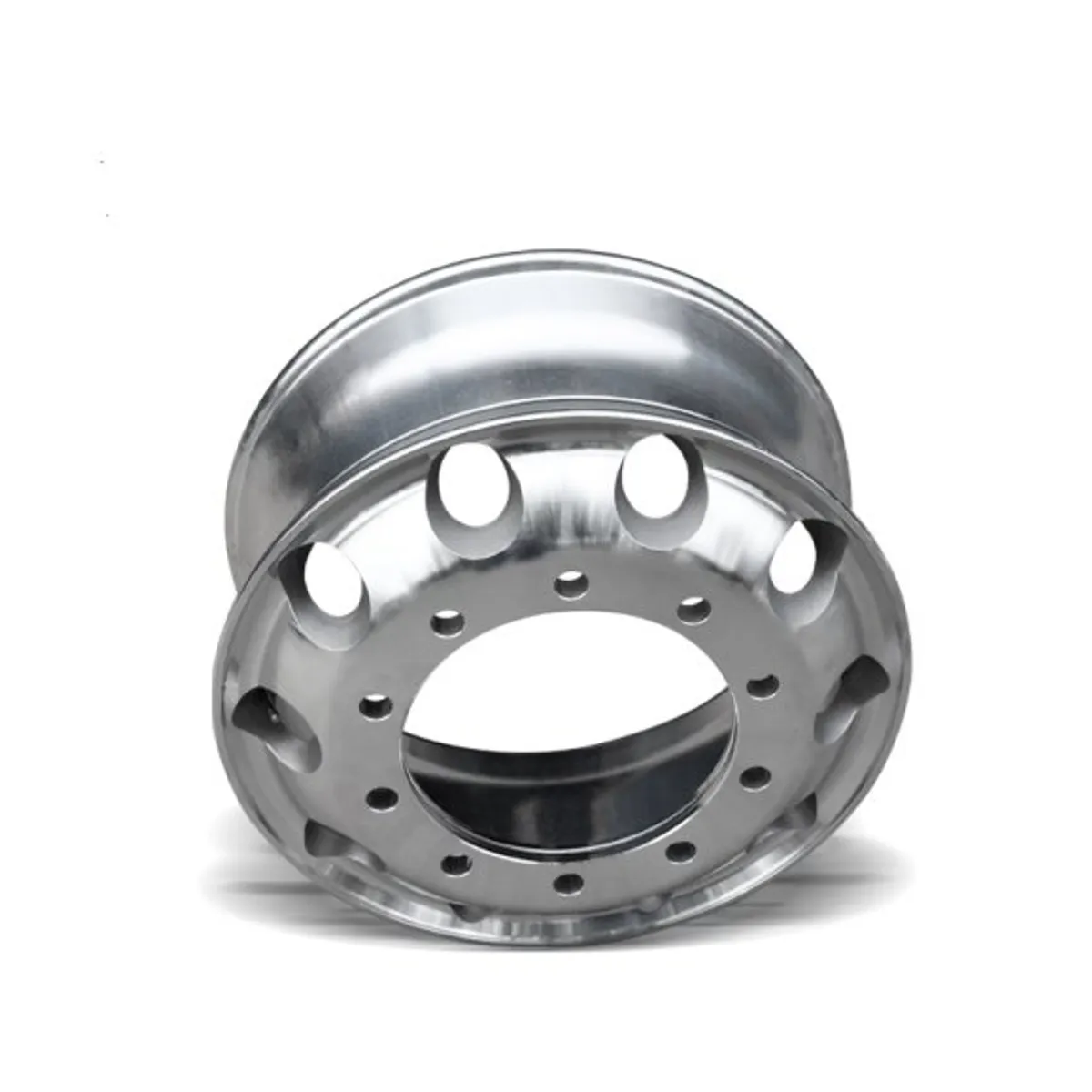
Trailer Wheel Rim Size and How to Choose Trailer Wheels
Trailer wheel rim size is the first spec to lock down, and for the overwhelming majority of heavy-duty semi-trailers worldwide, that means a 22.5 inch rim. This size pairs with the 11R22.5, 295/75R22.5, and 385/65R22.5 tire families that dominate long-haul and regional trucking, and matches the brake drum and hub diameters used on standard 13-ton and larger axles. Lighter trailers, small utility trailers, and some agricultural applications use a 17.5 inch rim instead, but if you're speccing a standard flatbed, tanker, reefer, or general cargo semi-trailer, 22.5 is the size to plan around. Buyers researching a tire rim size chart or rim size explained are matching diameter and width to their axle and tire.
So how to choose trailer wheels beyond just the rim diameter? Start with four things: rim width — cross-check it against a rim width tire size chart rather than relying on tire diameter alone — bolt pattern and pilot style (covered in detail below), load rating (the wheel itself has a rated capacity independent of the tire), and material (steel or aluminum). Skipping any one of these and choosing on rim diameter alone is the most common wheel-ordering mistake we see from first-time trailer buyers.
In Russian, the general product category is колесный диск на полуприцеп, and Russian-speaking buyers researching this topic are almost always trying to match rim size, bolt pattern, and offset simultaneously, since a generic search for the rim alone rarely surfaces the fitment data needed to actually place an order. In French, the equivalent terms are jante remorque (rim) and roue remorque (wheel, meaning rim plus mounted tire), both used depending on whether the buyer is ordering a bare rim or a complete wheel and tire assembly.
Portuguese-speaking buyers researching roda reboque should also confirm axle brand compatibility before ordering, since bolt pattern and pilot style vary between the major axle brands even at the same 22.5 inch rim size. See our full trailer wheels and rims range and matching trailer tires.
Tubeless vs Tube Type Rim, and Steel vs Aluminum Wheels
The tubeless vs tube type rim decision is mostly settled for new trailer builds: tubeless rims, which seal directly against the tire bead without an inner tube, are now the standard across nearly every market, since they're lighter, less prone to sudden blowouts from tube pinching, and easier to service roadside. Tube type rims persist mainly on older fleets still running tube-type tire stock, and on some rough-terrain or heavy off-road applications where operators prefer the tube design's tolerance for minor rim damage without an immediate air loss.
Steel wheel vs aluminum wheel is a separate decision from tubeless vs tube type, and one that comes down to budget and priorities rather than a clear right answer. Steel wheels cost roughly half of a comparable aluminum wheel, are more resistant to curb damage and rough handling, and remain the default choice for general cargo, tipper, and flatbed trailers running rough or unpaved routes. Aluminum wheels weigh 40 to 50 percent less than steel per wheel, which adds up to real payload gains across a full trailer set, dissipate brake heat better, and are the standard choice for premium long-haul and reefer fleets willing to pay the upfront premium for the weight and appearance benefit.
In Russian, buyers frequently search диск колесный на полуприцеп 22.5, specifying the size directly in the query because bolt pattern and offset vary enough between suppliers that a generic rim search wastes time. In French, the same size-specific search appears as jante 22.5 semi remorque, and French-speaking buyers typically follow up by confirming whether the rim is rated for tubeless or tube type tires before finalizing an order.
Disc Wheel vs Spoke Wheel Designs
Disc and spoke are the two basic types of trailer rims in production today. Disc wheel construction is the standard on modern trailers: a single-piece steel or aluminum wheel with the mounting face, rim, and center bore formed as one unit, bolted directly to the hub through a ring of wheel studs or a hub-piloted center bore. Disc wheels are simpler to balance, easier to clean, and the only style compatible with most modern hub-piloted mounting systems.
Spoke wheel designs, using a separate demountable rim clamped onto a spoked hub by a ring of lugs and clamps, are older technology that's mostly phased out on new trailer production but still common on older fleets and some heavy-haul applications where the demountable rim made tire changes easier before tubeless technology matured. Spoke wheels are heavier, harder to balance at highway speed, and increasingly difficult to source parts for as production shifts almost entirely to disc wheel designs.
Portuguese-speaking buyers researching jante semirreboque for older fleet replacement stock should specify clearly whether they need a disc wheel or a spoke wheel rim, since the two are not interchangeable and a supplier quoting one against a request for the other is a common source of returned orders. For new trailer builds and fleet standardization, disc wheel is almost always the right choice unless you're specifically maintaining a legacy spoke wheel fleet.
Hub Pilot vs Stud Pilot, Bolt Pattern, and Wheel Offset
Hub pilot vs stud pilot describes how a disc wheel centers itself when mounted, and getting this wrong means the wheel simply won't seat correctly even if the bolt pattern matches. A stud-piloted wheel centers itself on the wheel studs themselves, using tapered nuts that pull the wheel into alignment as they're torqued down; this is the classic 10-stud pattern still common across much of Asia, Africa, and the Americas. A hub-piloted wheel instead centers on a machined pilot register on the hub itself, using flange nuts rather than tapered ones, and has become the dominant style on newer European and North American trailers because it distributes clamping load more evenly and simplifies mounting disc-brake-compatible wheels.
Wheel bolt pattern (the number of studs and the diameter of the circle they sit on, for example 10 studs on a 335mm circle) must match the hub exactly; there is no adjustment or workaround for a mismatched pattern. A bolt pattern chart for rims helps cross-check stud count and diameter before ordering. Wheel offset (how far the mounting face sits relative to the wheel's centerline) affects track width and clearance around the suspension and brake components, and an incorrect offset can cause the tire to rub against the chassis, brake chamber, or an adjacent dual wheel. An offset rim chart or a check with the manufacturer confirms the exact figure before ordering.
Russian-speaking buyers researching диски колесные купить на полуприцеп should always request hub pilot vs stud pilot confirmation, bolt pattern, and offset together in the same quote request, since these three specs collectively determine fitment far more than rim size or material alone.
Trailer Wheel Torque Specs and Hub Bearing Maintenance
Trailer wheel torque specs matter as much as the wheel itself: under-torqued wheel nuts loosen under vibration and can shear studs, while over-torqued nuts can crack the wheel or strip threads. Standard torque for 10-stud heavy-duty trailer wheels typically falls in the 450 to 700 Nm range depending on stud size and wheel style, but always follow the specific torque spec published for your hub pilot vs stud pilot wheel type, since the two styles often call for different torque values and re-torque intervals. Re-torquing after the first 50 to 100 km following any wheel removal is standard practice and catches the majority of loosening issues before they become a lost-wheel incident. A trailer lug nut torque chart posted in the shop helps crews confirm the right figure by stud size.
The wheel hub bearing sits behind the wheel mounting face and carries the actual rotating load; a bearing running loose, dry, or contaminated will eventually show up as wheel wobble, heat at the hub cap, or uneven tire wear long before the bearing fails outright. Check the wheel hub bearing at every torque and rotation interval, and never assume a wheel that's spinning freely by hand has a healthy bearing, since play often only becomes obvious under load on the road. When you replace trailer wheel bearing components, do the full set, bearings and seal, not just the failed one.
One clarification worth making here: a trailer wheel rim is not the same component as a fifth wheel. In Portuguese, 5ª roda specifically refers to the fifth wheel coupling that connects the tractor to the trailer, not the trailer's own wheels and rims, and the two get confused occasionally in cross-language searches. If you're looking for that coupling component instead of wheels and tires, see our fifth wheel coupling range. For wheel, rim, and hub bearing parts, browse trailer wheels and rims or the broader trailer parts catalog.
Wheel Bearing and Hub Assembly Replacement Cost: What Actually Drives the Price
The cost of replacement wheel bearing work on a trailer axle depends far more on which repair path you take than on the bearing part itself, since the bearing is usually the cheapest line item in the job. A straightforward tapered roller bearing set, inner and outer races plus seal, is inexpensive and can often be pressed and packed in under an hour by a shop that already has the hub off. What actually swings the wheel hub replacement cost is whether the existing hub is reusable, whether you're dealing with a stud-piloted or hub-piloted wheel style that changes the pull-off procedure, and whether the job is done roadside as an emergency callout versus scheduled shop maintenance.
Wheel hub assembly replacement cost runs well above a bearing-only repair because you're buying the complete unit, hub casting, races, seal, and in many cases a pre-set sealed bearing pack, rather than machining and pressing individual components into a hub you already own. Sealed hub assemblies cost more upfront than serviceable bearings sold separately, but they cut labor time significantly since there's no bearing adjustment or seal-driving step on installation, which is why many fleets running high-mileage long-haul routes have standardized on sealed units despite the higher parts cost. OEM-branded hub assemblies typically carry a meaningful premium over an equivalent aftermarket unit built to the same bearing bore and bolt pattern, and for a fleet buyer replacing hubs across a full trailer set, that OEM markup adds up fast without necessarily buying better bearing life.
Labor is usually the larger share of the bill on any hub or bearing job, not the parts themselves, since pulling a wheel, drum or disc, and hub, then repacking or replacing bearings and reinstalling with correct torque and re-torque follow-up, takes real shop time regardless of which parts go in. Fleets that keep a standing stock of hub bearing kits and schedule bearing service at fixed mileage intervals consistently spend less overall than fleets that wait for a bearing to fail on the road, since an on-road failure usually means towing, a rush parts order, and after-hours labor rates on top of the repair itself.
Frequently Asked Questions
What trailer wheel rim size do most semi-trailers use?
How do I choose trailer wheels beyond just the rim size?
Tubeless vs tube type rim: which should I choose for a new trailer?
Steel wheel vs aluminum wheel: which is the better investment?
Hub pilot vs stud pilot: how do I know which type my trailer uses?
What are the correct trailer wheel torque specs and how often should I check them?
What drives the wheel hub replacement cost on a trailer axle?
How does front wheel bearing hub assembly replacement cost compare to replacing just the bearing?
Is wheel bearing hub assembly replacement cost higher for OEM parts versus aftermarket?
Tell us the part you need and your destination port — we'll send specs & a quote today.
Reply within 24 hours — or WhatsApp us at +86 199 5331 6215.